
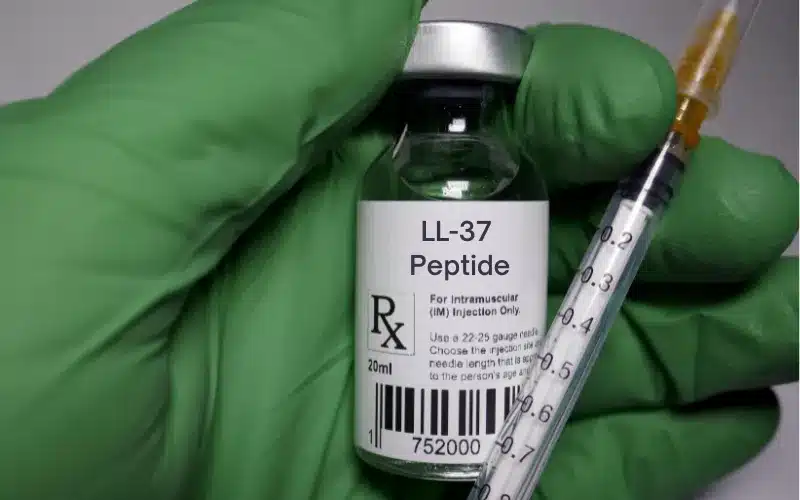
LL-37 is a remarkable peptide in human biology, known primarily for its antimicrobial properties. Belonging to the cathelicidin family of peptides, LL-37 is the only member of this family found in humans. It is derived from a precursor protein called hCAP18 (human cationic antimicrobial protein of 18 kDa), which, after cleavage, produces the active 37-amino-acid peptide—hence the name LL-37. This peptide has garnered significant attention not only for its role in innate immunity but also for its influence on inflammation, wound healing, and potential therapeutic applications.
Structure and Properties
LL-37 is an amphipathic, cationic peptide, meaning it has both hydrophilic and hydrophobic regions. This unique structure allows it to interact effectively with microbial membranes. Its positive charge facilitates attraction to negatively charged bacterial membranes, while its amphipathic nature enables it to insert into lipid bilayers and disrupt microbial integrity. These features make LL-37 a powerful broad-spectrum antimicrobial agent, capable of targeting bacteria, fungi, and some viruses.
The peptide is expressed in a variety of human cells and tissues, including neutrophils, epithelial cells, and keratinocytes. Its production is typically upregulated in response to infection or tissue injury, underscoring its crucial role in the innate immune response.
Antimicrobial Functions
The most well-known function of LL-37 is its direct antimicrobial activity. It combats pathogens through multiple mechanisms:
- Membrane Disruption – LL-37 can penetrate and destabilize microbial membranes, causing leakage of cellular contents and ultimately microbial death.
- Neutralization of Endotoxins – The peptide can bind lipopolysaccharides (LPS) on Gram-negative bacteria, reducing inflammation triggered by endotoxins.
- Intracellular Targeting – Beyond membrane disruption, LL-37 can enter microbial cells and interfere with vital processes, including nucleic acid and protein synthesis.
Interestingly, LL-37 does not generally harm mammalian cells due to differences in membrane composition, allowing it to act selectively against pathogens.
Immunomodulatory Roles
LL-37 is more than just an antimicrobial agent; it plays a significant role in modulating the immune system. It acts as a chemoattractant, recruiting immune cells such as neutrophils, monocytes, and T-cells to sites of infection or injury. This recruitment amplifies the immune response and enhances pathogen clearance.
Additionally, LL-37 can influence cytokine production. By modulating the release of pro- and anti-inflammatory cytokines, it helps balance immune responses and prevents excessive inflammation that could damage host tissues. This dual role in defense and regulation makes LL-37 a vital component in maintaining immune homeostasis.
Role in Wound Healing
Recent studies have highlighted LL-37’s role in tissue repair and wound healing. The peptide promotes angiogenesis—the formation of new blood vessels—which is crucial for supplying nutrients and oxygen to damaged tissues. It also stimulates the proliferation and migration of keratinocytes and fibroblasts, accelerating re-epithelialization and tissue regeneration.
Because of these properties, LL-37 has been investigated as a potential therapeutic agent for chronic wounds, burns, and other conditions where healing is impaired. Its natural origin and multifunctional activity make it a promising candidate for enhancing tissue repair while simultaneously preventing infections.
Potential Therapeutic Applications
The multifunctionality of LL-37 has spurred interest in its therapeutic applications. Some of the areas under investigation include:
- Antimicrobial Treatments – As antibiotic resistance becomes a global concern, LL-37 offers an alternative approach. Its broad-spectrum activity and low propensity for inducing resistance make it a compelling candidate for topical and systemic applications.
- Wound Care – LL-37-containing gels, creams, or dressings could enhance healing in chronic wounds or burns, particularly in patients with impaired immune responses.
- Immunotherapy – By modulating immune responses, LL-37 may have potential in treating inflammatory diseases or autoimmune conditions, although careful regulation is necessary to avoid overactivation.
- Anti-Biofilm Activity – LL-37 can disrupt biofilms formed by bacteria on medical devices or tissues, helping prevent persistent infections that are difficult to treat with conventional antibiotics.
Challenges and Considerations
Despite its promising properties, there are challenges in translating LL-37 into clinical therapies. One significant issue is stability; peptides like LL-37 can be rapidly degraded by proteases in the body. Researchers are exploring modifications or delivery systems to enhance its stability and bioavailability.
Additionally, while LL-37 generally targets microbes selectively, high concentrations or improper administration could potentially lead to cytotoxic effects or unwanted inflammatory responses. Careful dosing, delivery mechanisms, and formulation are therefore critical in therapeutic development.
Conclusion
LL-37 is a fascinating peptide that bridges innate immunity, antimicrobial defense, and tissue repair. Its unique structure enables it to act against pathogens directly while also orchestrating immune responses and promoting healing. As research advances, LL-37 holds significant potential as a therapeutic agent in treating infections, chronic wounds, and inflammatory conditions.
The study of LL-37 underscores a broader trend in medicine: leveraging natural peptides and biomolecules as innovative therapies. With continued research, LL-37 could become a cornerstone in next-generation treatments, addressing both microbial threats and tissue repair in a way that conventional drugs cannot.